
Mount Kilimanjaro: Africa’s Highest Peak

Mount Kilimanjaro is the world’s tallest freestanding mountain, rising dramatically from the plains of Tanzania at around 900 metres to its summit at 5,895 metres. Formed millions of years ago through volcanic activity, the mountain is made up of three cones - Shira, Mawenzi, and Kibo - with Uhuru Peak on Kibo standing as the highest point in Africa. Although located close to the equator, its summit is covered in snow and glaciers, creating one of the most striking natural contrasts on Earth.
Kilimanjaro is renowned not only for its height but for its incredible diversity. Climbers pass through five distinct ecological zones, from lush rainforest to alpine desert and the arctic summit, encountering unique landscapes, plant life, and wildlife along the way. While the climb is non-technical, conditions can be unpredictable, with varying temperatures and weather patterns throughout the ascent, making preparation and adaptability key to a successful and rewarding experience.
One of the most unique aspects of climbing Mount Kilimanjaro is the dramatic change in scenery and climate experienced during the expedition. Over the course of several days, climbers pass through multiple ecological zones, each offering completely different landscapes and conditions.
Lowlands: 790m - 1,800m
This is the subtropical area located just above the Serengeti plains. An area with heavier rainfall, its vegetation is dominated by banana, coffee, and other plants grown as crops.

The Five Ecozones of Mount Kilimanjaro
Rainforest: 1,800m - 2,800m
This is a subtropical rainforest rich with plant and animal life. The widest variety of flowering plants grow in this zone.

Moorland and Heath: 2,800m - 4,000m
This area has less vegetation and is dominated by a few plant and animal species, including groundsels, lobelias, heather, and tree moss. Trees disappear above 4,000 meters.

High Alpine Desert: Between 4,000 - 5,000 meters
This arid, semi-desert zone has no trees and few plants. Sage grass, hearty helichrysum flowers, moss, and thistles are common there.

Arctic Summit: Above 5,000m
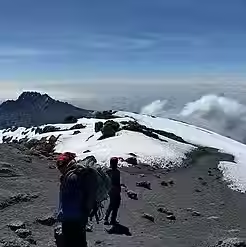
This is an arid zone with intense sunlight, thin air, and heavy snow and ice at times. Few to no plants grow there.
When is the Best Time to Climb Kilimanjaro?
Mount Kilimanjaro can be climbed throughout the year, and every season offers a slightly different experience on the mountain. While some months are considered more popular due to drier and more stable weather conditions, many climbers still successfully summit during the rainy seasons, often enjoying quieter trails and a more peaceful atmosphere.
The most popular climbing periods are generally from January to March and from June to October, when conditions are typically drier and visibility is often at its best. January to March tends to be slightly colder with occasional snow near the summit, while June to October offers clearer skies and some of the busiest climbing periods on the mountain.
The rainy seasons usually occur during April to May and again in November. During these months, trails can become wetter and muddier, particularly in the rainforest sections of the mountain. However, climbs are still very possible, and some experienced trekkers specifically enjoy the quieter routes, dramatic scenery, and reduced crowds during these times.
Ultimately, Kilimanjaro is a year-round trekking destination, and choosing the right route, itinerary, and preparation is often far more important than the specific month you choose to climb.
_Kilimanjaro.jpeg)
One of the World’s Seven Summits
Mount Kilimanjaro holds a special place in the world of adventure travel and mountaineering as one of the famous Seven Summits - the highest mountains on each of the seven continents.
The Seven Summits include:
-
Mount Everest (Asia)
-
Aconcagua (South America)
-
Denali (North America)
-
Kilimanjaro (Africa)
-
Elbrus (Europe)
-
Vinson Massif (Antarctica)
-
Carstensz Pyramid or Kosciuszko (Australasia/Oceania, depending on the list followed)
For many climbers, reaching Uhuru Peak at 5,895m (19,341 ft) is not only an incredible personal achievement, but also part of a globally recognised mountaineering challenge that has inspired adventurers for decades.
What makes Kilimanjaro particularly unique among the Seven Summits is its accessibility. Unlike some of the other continental high points, Kilimanjaro does not require technical climbing skills, ropes, or previous mountaineering experience. This makes it one of the most achievable Seven Summits while still offering a serious physical and mental challenge due to the altitude and multi-day ascent.
For some climbers, Kilimanjaro becomes the beginning of a larger journey into high-altitude trekking and adventure travel. For others, it is a once-in-a-lifetime goal - an opportunity to step outside their comfort zone and experience the incredible feeling of standing on the highest point in Africa.
Watching the sunrise from Uhuru Peak, above the clouds and glaciers of Kilimanjaro, is an unforgettable moment and one that places climbers among those who have stood atop one of the world’s great continental summits.
Is Kilimanjaro Difficult?
Climbing Kilimanjaro is a serious challenge, but it is achievable for many people with the right preparation and mindset.
The biggest challenge on Kilimanjaro is not technical climbing - it is altitude.
As climbers ascend higher, oxygen levels decrease, making acclimatisation extremely important. Choosing the right route and allowing enough time on the mountain significantly improves both comfort and summit success rates.
This is why we strongly favour routes with gradual acclimatisation profiles and longer itineraries wherever possible.
Good preparation before the climb can make a huge difference, including:
-
regular walking or hiking
-
cardiovascular fitness
-
leg strength training
-
stamina building
-
mental preparation
Many first-time trekkers successfully summit Kilimanjaro each year.
The Routes


Ready to Plan Your Kosher Kilimanjaro Adventure?
Whether you are planning your first Kilimanjaro climb, organising a private Jewish group expedition, or looking for a meaningful personal challenge, we would love to help you start the journey.